
We hold onto all kinds of things: emotions, beliefs, expectations and old stories about who we are. The harder we try to control what we feel, the more tightly those feelings can hold us.
In this episode of Sisters with Mirrors, we explore another possibility. What if the answer is not suppressing difficult emotions or forcing positivity, but learning how to let go?
This is not only about clearing the mind. It is about clearing our space, our bodies and our energy, then making room for a more accepting relationship with ourselves.
In this episode
We begin with the mirror and the uncomfortable truths it can reveal.
Mirrors are more than reflections. They show us what we are willing to see, including the thoughts that say I’m not good enough or I’m too much. Those moments do not have to be judgments. They can be invitations to notice what we believe about ourselves and decide whether those beliefs still deserve our trust.
We talk about visualisation as a way of building self-belief. Close your eyes and imagine the best version of yourself, not as a flawless stranger but as a real, possible expression of who you already are. The point is not to trick the mind. It is to practise giving yourself the credibility you may have been waiting to receive from somewhere else.
Because the world does not have to validate you before you can begin believing in yourself.
Water, crystals and the practice of release
Letting go can feel abstract, so we explore a simple ritual that gives it a physical form.
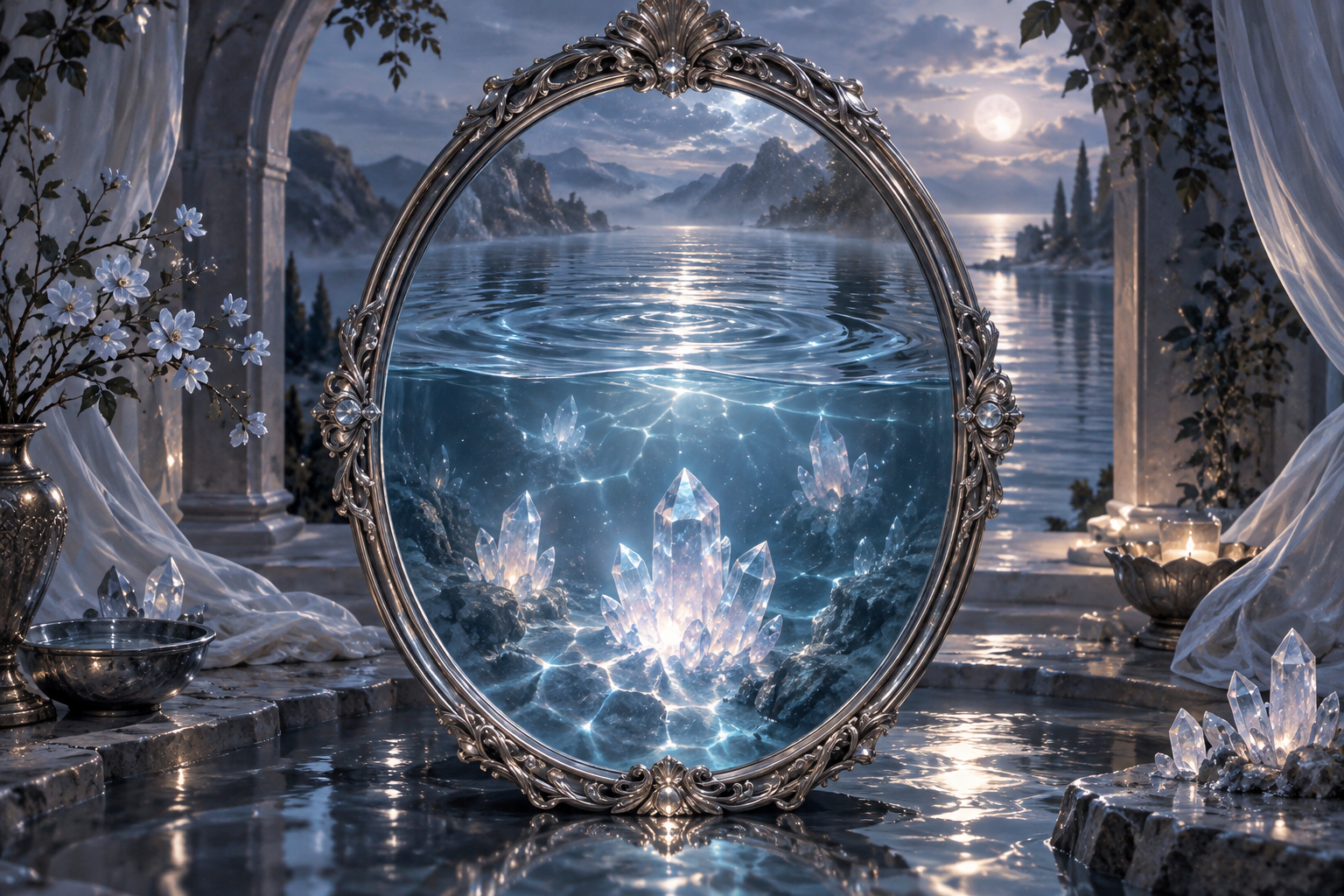
Take a bowl of water and add a few quartz crystals. Sit with it for a moment. Let the thoughts and feelings weighing on you move into the water in your imagination. When you are ready, pour the water out and allow the action to mark your decision to release what no longer needs to stay.
The power of a ritual like this lies partly in its symbolism. Water is fluid, cleansing and always moving. It reminds us that feelings do not have to become permanent simply because they are intense.
Crystals can serve as a point of focus: something tangible to hold while we name what is happening inside us. The object does not have to do the emotional work for us. It can help us slow down long enough to do that work consciously.
We also talk about grounding through the body and the natural world. That might mean stepping into the ocean, putting your feet on the earth, screaming into a pillow or plunging your head into saltwater. Sometimes release needs more than a thought. Sometimes it needs breath, movement, sound and sensation.
There is a line between carrying an emotion and allowing it to move through you. Learning to cross that line is part of the art of letting go.

The illusion of control
The need for control often appears when we are afraid of what might happen if we loosen our grip.
We can try to manage every emotion, predict every outcome and protect ourselves from every disappointment. But control can become its own kind of trap. The more energy we spend refusing uncertainty, the less freedom we have to respond to life as it actually unfolds.
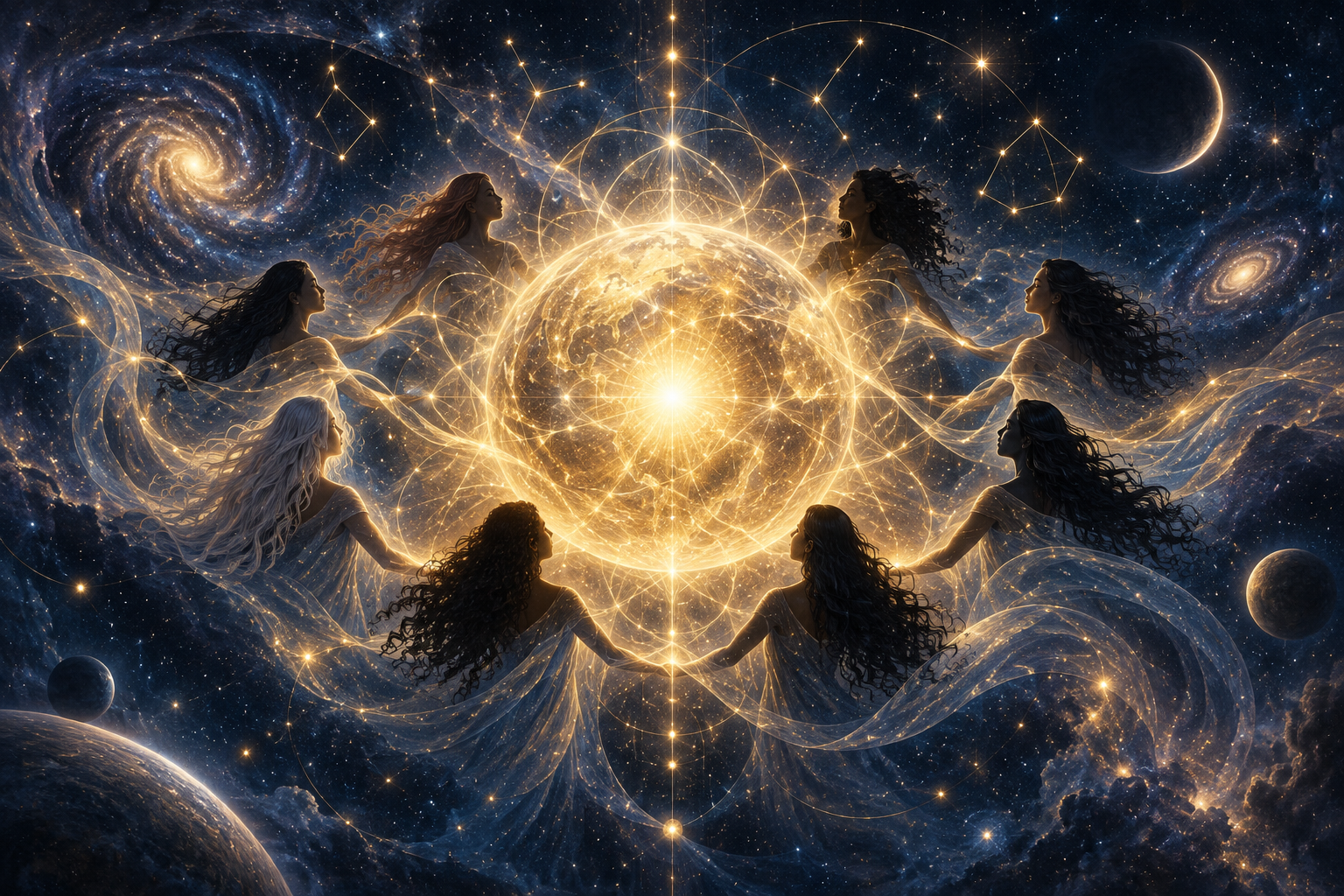
This leads us into a wider conversation about collective energy and consciousness. When we mention ideas such as the Illuminati, we are not treating them as a claim about secret societies. We use the reference as a doorway into questions about the unseen connections between people: how our fears, hopes, beliefs and emotions may become threads in something larger than any one of us.
Mirrors, water and crystals matter in this conversation not because they offer easy answers, but because symbols give us a language for experiences that are difficult to explain directly. A mirror invites reflection. Water suggests movement and cleansing. A crystal can represent focus, energy and transformation.
Each one asks us to look a little deeper.
The art of the unseen
Some truths are difficult to face not because they are hidden from us, but because we have become skilled at looking around them.
We all get caught inside our own stories. We decide what an experience means, who was right, who was wrong and what must happen next. In that state, one of the most powerful questions we can ask is: what if I am wrong?
The answer does not always arrive through more analysis. Sometimes it appears in the silence after the question, when we stop defending the version of ourselves we already know.
What if the mirror is not only there to show us who we are?
What if it can also show us who we are not: the expectations, fears and inherited beliefs we have mistaken for our identity?
That possibility keeps us curious. It turns self-reflection from a search for faults into a practice of discovery.
A final reflection
We do not have all the answers, and that is part of the beauty of this work.
Letting go is not about finding one perfect ritual or reaching a permanent state of calm. It is about staying willing to explore, question and release. It is about loosening the need to control everything and learning to trust the process without abandoning our responsibility to ourselves.
So here is to the mirrors, the water, the crystals and the illusions we are still learning to see through.
And if you are feeling stuck, remember: you do not have to carry the weight alone.
Open your mind. Question everything. Step through the mirror.